

Third.i has elected to use state pathways, instead of a new Inner West regime, for its 300-home precinct just 90m from Marrickville station.
The project at 31-41 O’Hara Street, about 7.5km west of the Sydney CBD, has secured Housing Development Authority endorsement, and will use Transport-Oriented Development controls, for a mixed-use complex.
Third.i partner Florian Caillon told The Urban Developer that the developer is leaning towards build-to-rent, but build-to-sell may be in the mix.
“Marrickville’s got a huge amount of character,” Caillon said.
“I love it. I’m an inner Westie myself.”
However, the scale and speed needed for the project meant that Third.i opted for the HDA and TOD pathways, rather than the council’s 30,000-home Our Fairer Future alternative (which has yet to be approved at a state level).
“Inner West Council were moving at a different pace with the Fairer Future plan, and ultimately, we were going to seek an improved density outcome as the plan never comtemplated an amalgamation of this size,” Caillon said.
“ We needed some legislative certainty. I also knew that it was pretty unique to be able to amalgamate that amount of freehold—over 5000sq m, 90m from a station. So I knew that it would stand on its own. That’s why I used the HDA to just run the opportunity for the site.”
The scheme will take advantage of the bustling retail strips on Illawarra and Marrickville roads, without deploying large-scale supermarkets or late-night entertainment.
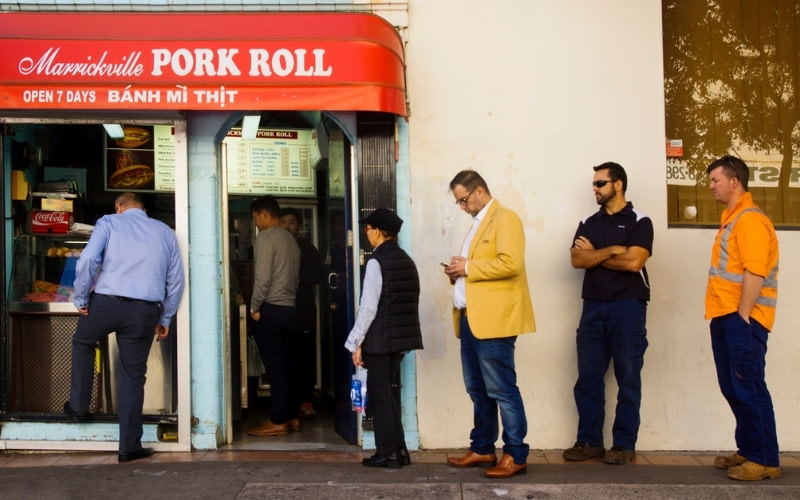
▲ The suburb has a mix of residential and industrial uses, as well as thriving retail and entertainment strips.
“The beauty about what we’ve amalgamated is it allows us to have four active street frontages, and one of those main active frontages is actually pedestrianised.
“What we want to do is a similar concept to Spice Alley, which has lots of little tenancies…there’s such a thriving Vietnamese and Greek community, I think little pocket retail would work quite well.
“Obviously [we have] to work through our urban design outcome to figure out what we would be able to fit, but it would nothing of scale. It would be more of a boutique take on retail, and trying to bring in a really well-curated F&B outcome.
Proximity to the Marrickville Metro station, which is projected to open this year, will benefit the Third.i project over others in the suburb.
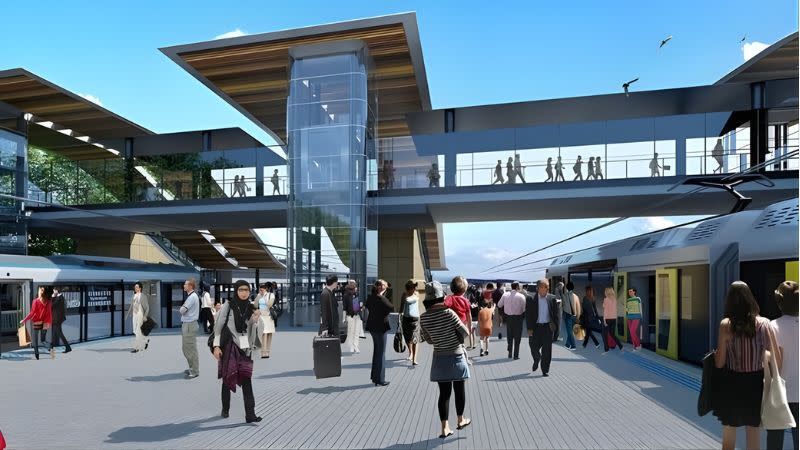
▲ Marrickville train station will soon complete an upgrade to join the Metro network.
“They’re good developments, but they’re very far from the actual village, and a 10 or 15 minute walk from Sydenham station.
“From my development, you’re almost at Martin Place by that time.
“That’s not to discount those other sites, because they’re needed, and they’re definitely going to add value and bring people into the area…For me, it was really important to try and get something right in the village, right next to Marrickville Metro [station].”
Typologies will range from studios to three-bedrooms, Caillon said, with the developer “conscious that we’re in a housing crisis”.
“We want to try and create outcomes where people of different walks of life and different budgets can afford to live in a thriving mixed-use precinct.”
Essential workers a core concern
A 17 per cent affordable component will be dedicated to essential workers, “which is something pretty special”, Caillon said.
The Our Fairer Future plan would require a 3 per cent affordable contribution, or 20 per cent in exchange for additional floor space.
However, an extraordinary council meeting on April 28 will discuss a new affordable housing policy, in response to additional modelling by Atlas Economics in January. Among other changes, that policy would shift council’s preferred housing contributions from an in-kind to a monetary model, while also changing the contributions formula.
“We’ve got a housing crisis that’s turning into a health crisis, because we’ve got too many essential workers leaving New South Wales,” Caillon said.
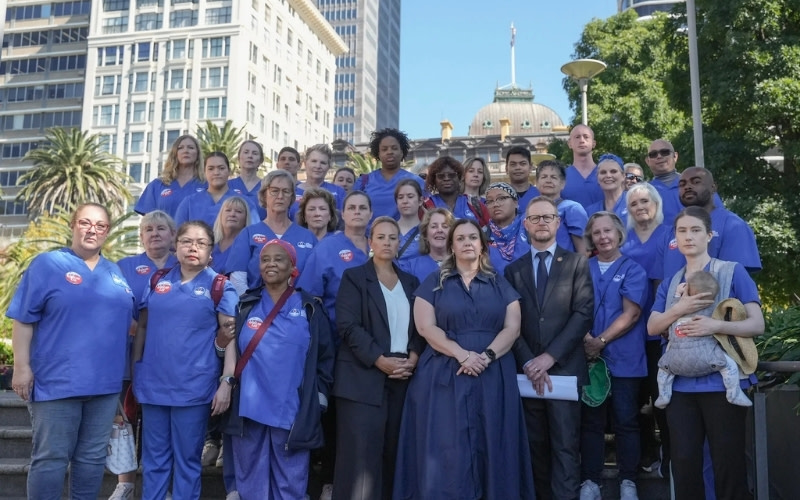
▲ Pay rates for NSW nurses were among the lowest in the country prior to a April 16 pay raise, prompting many to leave the state, the union said.
“From a development standpoint, we need to do more to be able to bring essential workers back into Sydney metropolitan zones, to serve as public infrastructure.”
Nurses have been called out as particularly vulnerable to housing stress, with Third.i working closely with the NSW Nurses and Midwives Association across its developments. Caillon said the developer was also in discussions with police and retail worker unions.
Meanwhile, Anglicare has been aiming to grow its housing portfolio from 700 to 4000 beds over the decade, with a pivot from aged care and emergency housing towards essential workers. A $140-million, 37-storey tower at Merrylands would dedicate all 238 homes to essential workers.
Landcom will also dedicate the entirety of a $236-million, 220-apartment tower on Parramatta Road to key workers, just 500m from Royal Prince Alfred hospital.
After a two-year battle, on April 16 the NSW Industrial Relations Commission awarded registered nurses a 16 per cent raise over three years, describing them as “historically undervalued”.


Subscribe for Updates
Stay informed about our latest projects, investment opportunities, and industry insights by subscribing to our exclusive Third.i Group updates.
"*" indicates required fields